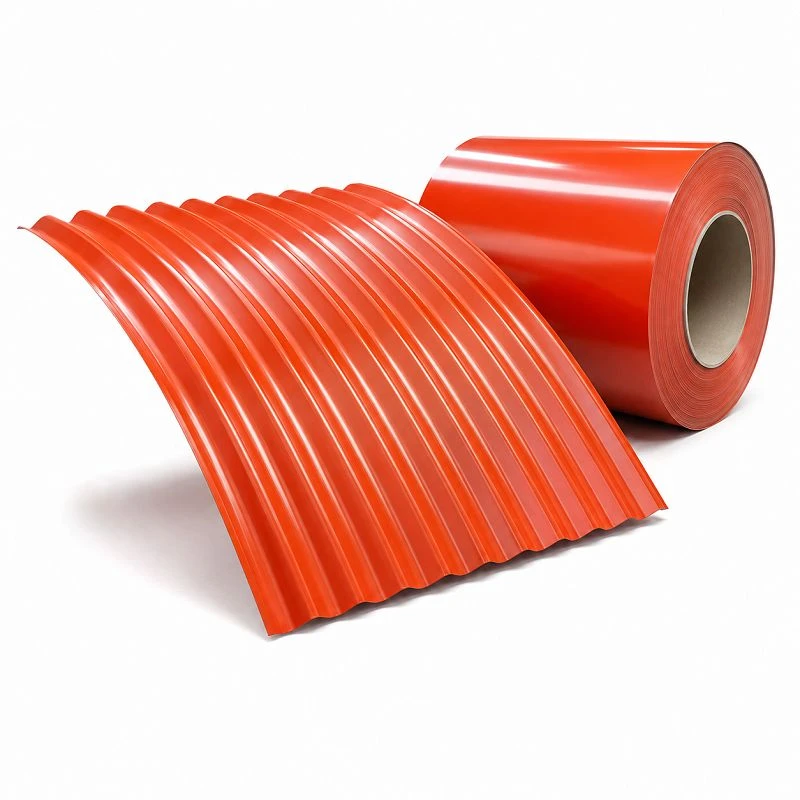
Color-coated steel panels are becoming increasingly important in modern construction as buildings place greater emphasis on lightweight structures, efficient installation, and industrialized production. Widely used in factories, warehouses, public buildings, and prefabricated structures, these panels are engineered as multilayer systems rather than simple sheets of steel. Their performance depends on the coordinated contribution of the steel substrate, protective metallic layer, organic coating, and, in some designs, an insulated core.
The steel substrate provides the primary structural foundation of the panel. It contributes strength, rigidity, and dimensional stability, while its specifications are selected according to the intended application. Thickness, mechanical properties, flatness, and surface quality can all affect forming, installation, and long-term performance. Selecting a substrate that matches the structural and processing requirements is therefore an important part of product design.
A metallic protective layer is commonly applied to the steel surface to improve corrosion protection. This layer helps create a barrier between the steel and environmental factors such as moisture and oxygen. In addition to improving resistance to corrosion, proper surface treatment provides a suitable foundation for the organic coating system and can contribute to stronger adhesion between the different layers.
The organic coating is one of the defining features of color-coated steel. A typical coating system includes a primer and a topcoat. The primer helps bond the coating to the substrate and provides an initial level of protection, while the topcoat delivers much of the product's color, gloss, and environmental resistance. Different coating technologies can be selected to meet requirements for weatherability, corrosion resistance, flexibility, and surface appearance.
Some color-coated steel products are manufactured as insulated sandwich panels. In these systems, an insulation core is positioned between two metal skins to provide additional building-envelope functions. Depending on the core material, the finished panel can offer different combinations of thermal insulation, fire performance, weight, and acoustic properties. The appropriate configuration depends on the requirements of the building and its operating environment.
Industry specialists emphasize that the performance of a color-coated steel panel is determined by the entire material system rather than any single component. Substrate quality, metallic protection, coating technology, and composite construction must work together to deliver reliable performance. As sustainable construction and advanced manufacturing continue to develop, future color-coated steel products are expected to focus increasingly on durability, energy efficiency, environmental performance, and specialized functionality.