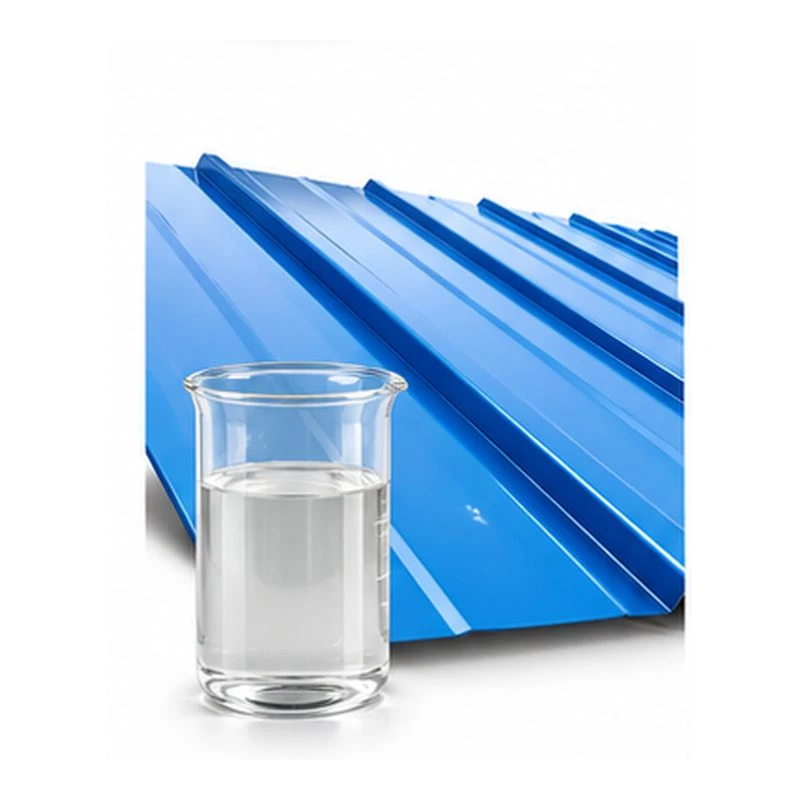
Growing demand for industrial coatings, construction materials, and composite products has brought greater attention to the molecular design of polyester resin. As an important class of polymers, polyester resin derives its performance from factors such as molecular-chain composition, functional groups, molecular weight, and crosslinking structure. By carefully adjusting these characteristics, manufacturers can develop resin systems suited to different processing methods and service conditions.
A defining feature of polyester resin is the presence of ester linkages along its polymer backbone. These polar groups contribute to interactions between the resin and other materials. In coating formulations, this structural characteristic supports film formation and provides a stable matrix for pigments, additives, and other formulation components.
Polyester resin also offers considerable flexibility in molecular design. During synthesis, manufacturers can select different polyols and polyacids and adjust their proportions to influence chain length, branching, flexibility, and other structural characteristics. These changes can affect viscosity, hardness, adhesion, film formation, and mechanical performance, allowing the resin to be tailored to specific product requirements.
For polyester systems that rely on chemical curing, crosslinking structure is another important consideration. During the curing process, polymer chains can become interconnected to form a more stable network. Appropriate crosslink density can improve mechanical strength, chemical resistance, and coating durability. However, excessive crosslinking may reduce flexibility, while insufficient crosslinking can limit hardness and long-term performance. Achieving the right balance is therefore an important part of formulation development.
In coatings for color-coated steel, resin architecture must also accommodate continuous manufacturing and subsequent forming operations. Steel panels may undergo bending, stamping, and other processing steps during production or installation. The coating therefore needs sufficient adhesion and flexibility to withstand deformation without compromising surface integrity. For outdoor applications, the resin system must also provide suitable resistance to ultraviolet exposure, moisture, and temperature fluctuations.
Industry specialists point out that polyester resin architecture can be deliberately engineered rather than treated as a fixed characteristic. As demand grows for high-performance and environmentally responsible materials, future research is expected to focus on molecular optimization, functional modification, and more sustainable synthesis technologies. These advances could further expand the role of polyester resin in coatings and advanced material applications.